
Dendrochronology can be a very valuable tool for determining the ages of ancient wooden artifacts, wooden building parts, and objects associated with those datable items. To use this science accurately requires establishing a master index of average tree-ring widths from a large selection of trees or logs from the same broad region encompassing ancient sites. To establish such an index requires taking core samples from trees or logs and comparing their tree-ring patterns to determine how the individual cores align with each other. The annual growth measurements also should be adjusted to compensate for different rates of ring-width growth during the trees’ lifecycles. Only then can they determine average ring widths.
Other steps are necessary, such as eliminating tree cores with missing or extra rings. Moreover, only trees that grow in areas with a relatively low water table are helpful because they more accurately reflect variations in precipitation. (Trees with a year-round easy access to water have fairly uniform ring widths.)
Just as scientists must cross-date the individual tree cores, they can further cross-date the resulting datasets from more distant sites. If the overlapping growth periods are at least a century long, have very similar climates, and the geographical distance between them is not too great, cross-dating datasets is often possible. If the concurrent rings extend to two centuries or more, even relatively distant sites can be cross-dated with statistically significant correlation coefficients.
When scientists core living trees, they know the outside ring represents growth of the current year (this year or last). However, if they are constructing a master index from ancient logs, they must use radiocarbon dating to determine the approximate dates of the rings. This method can be problematic because radiocarbon dating is rarely precise to the year, and as discussed in a recent post, every growing site has distinct offsets in carbon-14 levels. Even some dendrochronologists, who should know better, have attributed an accuracy to radiocarbon dating that it simply does not have.
The last two posts discussed how two scientific methods, radiocarbon dating and astronomical dating, can produce misleading results. The problem with Middle Eastern dendrochronology is almost diametrically opposed to those of these other sciences. Nearly ideal circumstances have enabled the construction of a tree-ring index spanning thirteen centuries, known as the Aegean Dendrochronology Master Index (ADMI). However, the biggest problem has not been the science but rather the scientists! Although all the scientists associated with this project have produced some outstanding work, they have also made some serious errors.
The purpose of using sciences in ancient chronology is for those sciences to guide historians to a more accurate understanding of ancient dates, rather than vice versa (i.e., altering the science to conform with conventional interpretations of ancient chronology). Unfortunately, those traditions have unduly influenced a few scientists, specifically some dendrochronologists and radiocarbon scientists. Consequently, they have sometimes altered their interpretations of scientific data or biasedly interpreted it to conform to conventional timelines.
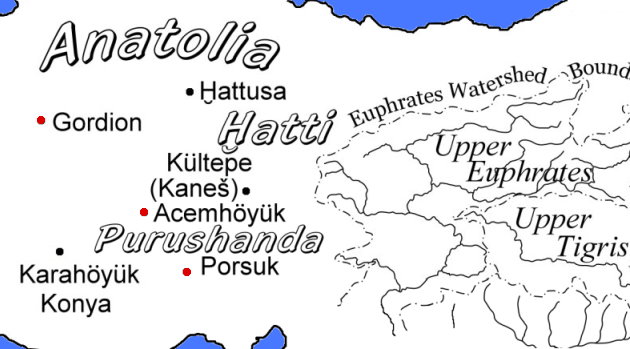
For example, early in this century, as the science of radiocarbon dating improved, Cornell University dendrochronologists adjusted the anchor date of the Gordion tree-ring dataset, the final part of the ADMI, by adding 22 years to its age, correctly assigning its last annual growth to 740 BCE with a possible 12-year error range. Within a few years, they had successfully and accurately cross-dated the Gordion and Porsuk datasets. Although the Gordion-Porsuk correlation coefficient was relatively low, the long two-century-plus overlapping period made it statistically significant. Moreover, an earlier article had already established a robust cross-dating of Porsuk and Acemhöyük juniper datasets. Eventually, Peter Kuniholm, the founder of the ADMI project, left Cornell and led a team of tree-ring scientists at the University of Arizona. Then, in 2016, the Cornell dendrochronologists erroneously retracted these two crucial Porsuk cross-datings, contrary to the Arizona team’s correct understanding that these cross-datings were valid. Nevertheless, both sets of scientists overly trusted imprecise radiocarbon dates and the conventional chronology, and they altered their anchor dates for the Gordion dataset to inaccurate, earlier dates.
The forthcoming book, The Six Pillars, astronomically anchors the ADMI and confirms the accuracy of the previously published Gordion anchor date and the Porsuk cross-datings. Moreover, it reveals the ADMI is far more valuable than the dendrochronologists ever imagined. In the second millennium BCE, the ADMI’s extremely thin or thick tree rings accurately reflect Mesopotamian weather extremes, i.e., historical droughts and excessive floods.