
Radiocarbon dating can narrow the ages of tree rings to a theoretical range of years. (However, regional offsets sometimes cause that range to exclude the actual age.) Within that radiocarbon-dated age range, is it possible to date tree-ring sequences astronomically to exact years in the Julian calendar (years BCE)? Initially, this might seem utterly incredible, even absurd. Nevertheless, under certain unusual circumstances, it is possible to chronologically link a dendrochronological index to celestial configurations. The Aegean Dendrochronology Master Index (ADMI) and related historical data meet those prerequisite conditions.
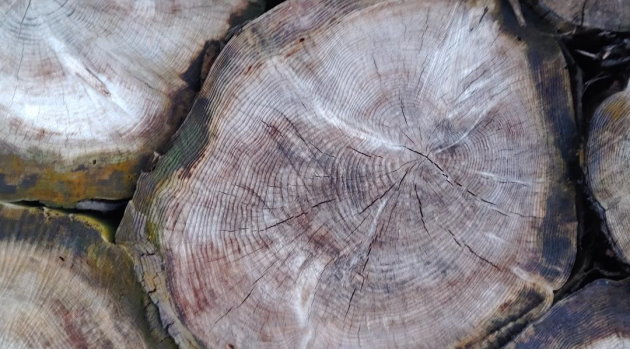
In temperate forests, trees develop their annual rings with denser cell growth in colder conditions and porous growth in warmer seasons. In addition to these seasonal variations, tree-ring widths vary from year to year in response to temperature and precipitation. Dendrochronologists intentionally select trees (or logs) that grow (or grew) in areas with a deep water table. Consequently, their annual growth is closely related to the relative abundance of water from rain and snow.
Differences resulting from Milankovitch cycles led to extremely high correlations between tree-ring widths and Mesopotamian flood levels in the second millennium BCE. Therefore, the extremes of ring width in the Aegean Dendrochronology directly equate with extremes in precipitation, i.e., droughts or excessive flooding. Moreover, ancient historical records often included details of those same events. Therefore, it would be theoretically possible to relate recorded droughts and damaging inundation events with the tree-ring index.
The sets of tree rings that comprise the ADM Index are from Anatolia, and such weather-related ancient historical records from that location are rare. However, those growing sites were near the upper Euphrates River watershed; furthermore, the mountains rise to higher elevations to the east. Consequently, the eastward-moving weather systems that brought rain to the ADMI sites also usually caused rainfall in the upper Euphrates and Tigris Rivers watersheds. The Mediterranean weather systems produced heavy precipitation in winter and, in some areas, in the spring, whereas summers were dry.
Due to the elevation of those eastern Anatolian mountains, winter precipitation typically fell as snow or freezing rain. When the spring thaw came, it caused higher river levels, bringing annual flooding in the regions of Assyria and Lower Mesopotamia (northern and southern Babylonia, including Sumer). Although occasional winter rain fell in Mesopotamia, most Mesopotamians depended on irrigation from the rivers to grow their crops. When droughts occurred, diminished annual flooding affected their food supply.
Ancient Assyrian records often included details of repairs to the outer wall of their capital city (adjacent to the Tigris River), suggesting flood damage. A few records specifically stated such repairs were necessary due to excessive inundations. Their dating system used limmu for year names, but extant eponym lists are rare. Thus, not many of those events are datable to specific regnal years, but a few are. The Babylonians had fewer problems with destructive floods, but reported repairs to dikes are usually datable to the exact year, and some attributed the damage to excessive flooding.
Droughts in ancient Mesopotamia were not unusual. People stored food in case the usual precipitation and flooding failed the following year. When that occurred, it harmed the farmers financially, but people generally survived on stored food and alternate sources such as hunting, gathering, and fishing. Nevertheless, when a severe drought persisted into a second year, food prices skyrocketed, risking starvation among some of the poorer classes. When it continued into a third year, it caused widespread famine.
Historical data records two such severe famines in Mesopotamia, along with the regnal years in which they occurred. Within the indicated radiocarbon-dated ages, it is no coincidence that each set aligns with three excessively narrow rings in the ADMI. Moreover, reliable king-list and historical data identify the intervals between those events and recorded astronomical events, anchoring the entire floating tree-ring index to exact Julian calendar years.

This unusual situation means that every year of the 1291-year-long ADMI represents an indirect astronomical date. Consequently, it provides a general index of yearly Mesopotamian precipitation for the entire millennium. Moreover, every event relatable to a specific tree ring is precisely datable.
Despite what some dendrochronologists say, this astronomical dating of the Aegean Dendrochronology is superior and more precise than radiocarbon dating. Furthermore, claims that radiocarbon dating disproves statistical crossmatching of tree-ring sets are mistaken because each Anatolian ADMI growing site has a different average offset from IntCal.
The Six Pillars (forthcoming) Chapter 3 and Appendix B provide more details about the astronomical anchoring of the ADMI. Scientific Explanations for Radiocarbon Offsets at Astronomically Dated Sites, Volume I (forthcoming) explains Anatolian radiocarbon offsets at the ADMI sites.
3 comments