
Many ideas (or theories) about ancient Middle Eastern chronology are controversial. Even now, scholars are divided about which one of the timeline models based on the Venus Tablets of Ammi-şaduqa is correct. Since the Middle Chronology model has scientific data (radiocarbon dating and dendrochronology) to support it, proponents of that theory might consider the Ultra-Low chronological model to be “a fringe theory.” What does this phrase mean?
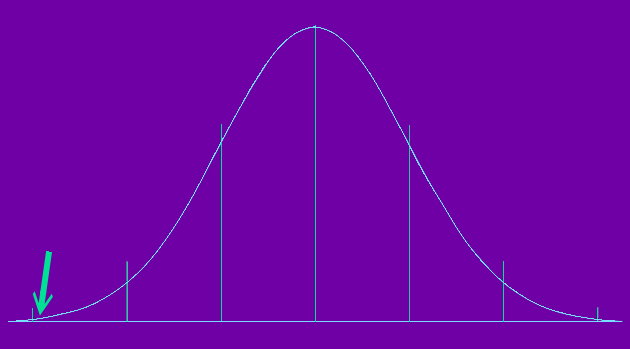
Wiktionary defines “fringe theories” as “ideas that are not supported by mainstream scholarship.” In other words, ideas that might be right or wrong that academia has not widely accepted are “fringe theories.” They are “fringe” because those who think they are reasonably accurate are a small minority, like the diminishing edges of a bell-shaped curve. Scholars who often label an idea as a “fringe theory” feel that the evidence against that model is so overwhelming that it cannot possibly be true, and they use this expression pejoratively. In many cases, they are probably correct. However, suppose a university professor has written extensively about ancient chronology and insists his viewpoint (or the conventional understanding) is accurate. In that case, he might be unwilling to admit that an alternative model is possibly superior. That is especially true if that professor is excessively narcissistic (as a disproportionate number are) since narcissists are inwardly vulnerable and especially sensitive to criticism.
Why do researchers develop fringe theories? In some cases, legitimate reasons exist for formulating alternative models. For example, as explained in a previous post, the Middle Chronology Venus Tablets dating of the Old Babylonian Era is accurate. Nevertheless, advocates of the Low and Ultra-Low models correctly observe that the interval between the Hammurabi-Šamši-Adad-I synchronism and the Amarna Period could not have been as long as four centuries. Consequently, they feel academics must redate the Old Babylonian Era to around a century later. In this case, both the Middle and Ultra-Low models are half correct.
Many ideas that mainstream scholars now accept as truthful began as fringe theories. What this point illustrates is that popular conventions are sometimes wrong. A field can advance only when scholars open-mindedly consider alternative ideas with better evidence or interpretations.
Some chronological models are fringe theories that can never become mainstream because their evidence is insufficient or contrary to factual ideas. For example, the theories promoted by Immanuel Velikovsky, Dr. David Rohl, and the authors of Centuries of Darkness are sufficiently contrary to available timeline evidence that their fundamental theses are inevitably false. Nevertheless, their written works have many thought-provoking ideas worth considering, and a few of their criticisms of mainstream ideas are valid. These authors agree that the conventional Middle Eastern timelines are too long, and researchers should shorten them. However, The Astronomical Chronology model (including The Six Pillars) proves that the mainstream understanding places most historical events in the second millennium BCE too late, not too early!

An additional commonality of those fringe theories is that they start with incorrect premises and find data they can interpret to support their ideas. This process often involves matching two historical characters who lived centuries apart and declaring they were the same person. This approach requires a considerable amount of confirmation bias.
Are the ideas in the model called The Astronomical Chronology fringe theories? Well, yes and no. Many of its ideas are insufficiently publicized, not widely accepted, and in the “fringes.” However, probably most scholars studying the second millennium BCE Middle Eastern chronology believe that the Middle Chronology model is correct, and the book The Six Pillars proves it is. Once we publish it, the astronomical dating in this model and the multi-layered interlinking networks of evidence, the “Six Pillars,” are so conclusive that it is only a matter of time before it becomes mainstream. If the evidence supporting a model is utterly convincing and objectively proven, it is no longer a theory but factual.
Of course, some narcissistic professors will go to their dying breaths denouncing The Astronomical Chronology. Conversely, those researchers who believe scholarship should be evidence-based will have no problem accepting this new paradigm because once they take the time to examine it, they will find the arguments so compelling that they cannot deny its veracity.